
Research & Universities
Bees as
sentinels of the air.
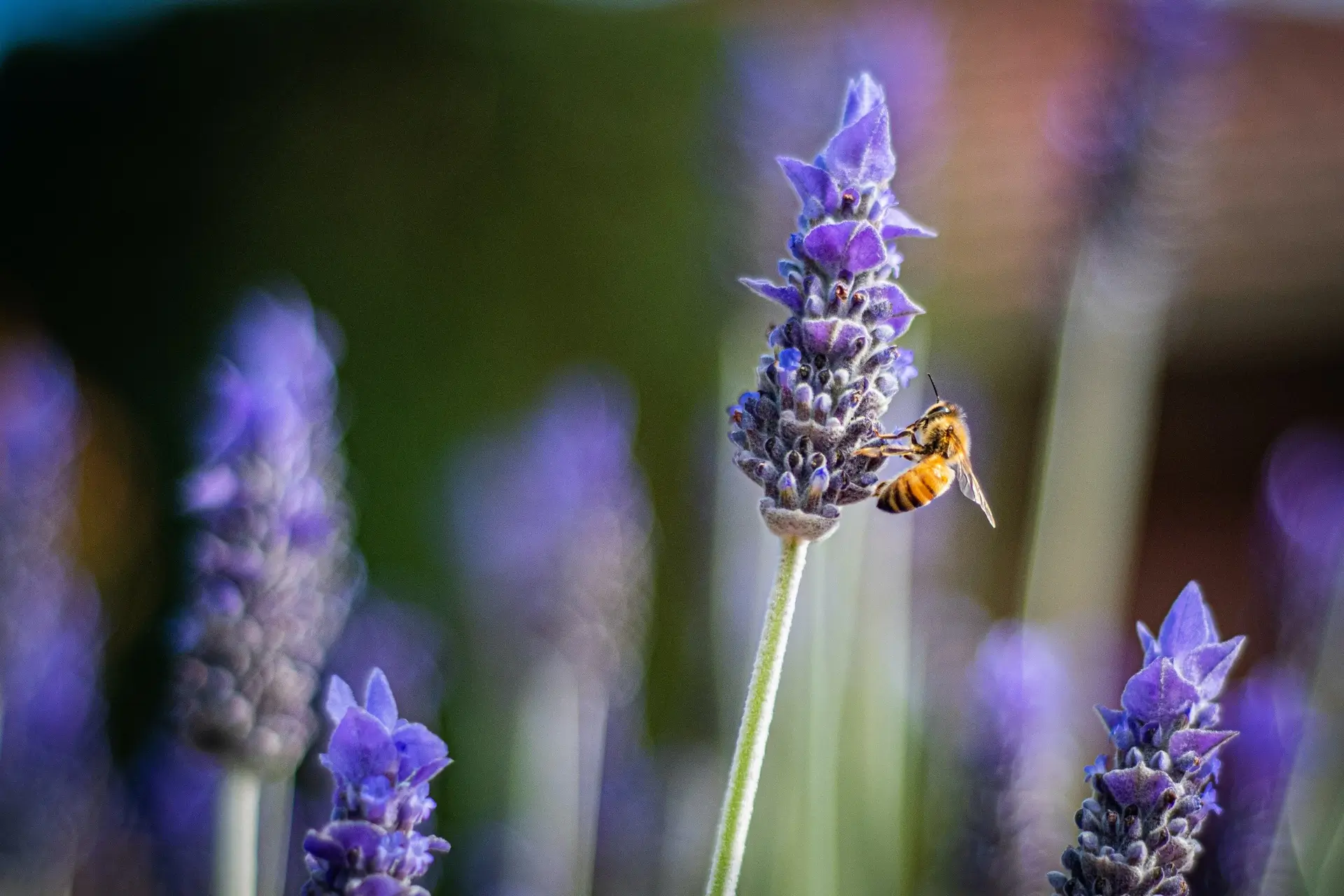
Every bee visits 7,000 flowers a day within a 3 km radius. The pollen brought back, the wax produced, and the honey stored are biological samples of extremely high spatial resolution.
How it works
A living
monitoring station.
We install instrumented hives (IoT sensors, precision scales, GPS) in strategic city locations. Bees fly, gather, and return. Our laboratories analyze wax, pollen, honey, and condensation water via mass spectrometry.
Data published in open data format every 30 days. Accessible to municipalities, environmental agencies, universities, and citizens.
Scientific partners
Who we work with.
Beeing partners with Italian universities and public institutions on research projects. Shared protocols, replicable data, and peer-reviewed publications.
- University of Bologna · DISTAL Department
- CREA · Research Centre for Agriculture and Environment
- ARPA Emilia‑Romagna (Environmental Protection Agency)
- Polytechnic University of Milan · DABC Department
- ISS · National Institute of Health (consultancy)