Check local regulations
In Italy, urban beekeeping is regulated by Law 313/2004. Free registration with the BDA (National Apiary Database) within 20 days of introducing the swarm.
Guide for beginners
Four steps to get started, four myths to debunk, two tools to guide you. No countryside land, no prior experience needed. Just a wish to care for bees.

Four steps
In Italy, urban beekeeping is regulated by Law 313/2004. Free registration with the BDA (National Apiary Database) within 20 days of introducing the swarm.
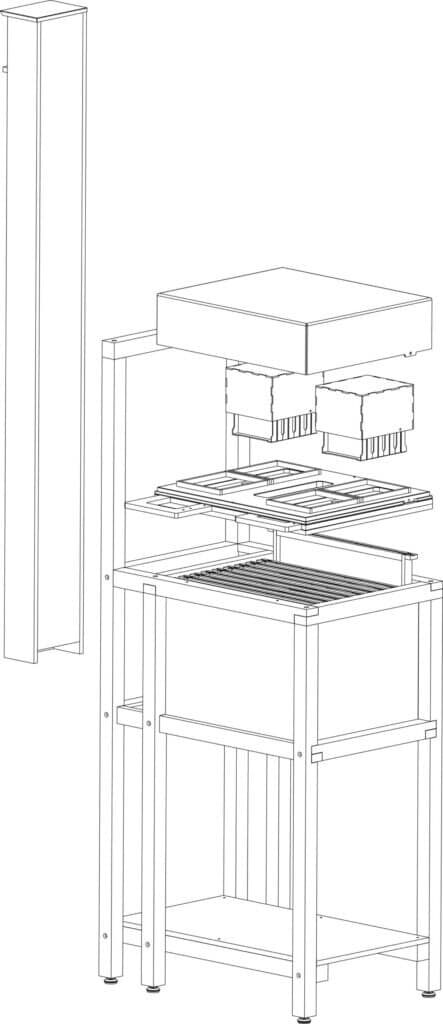
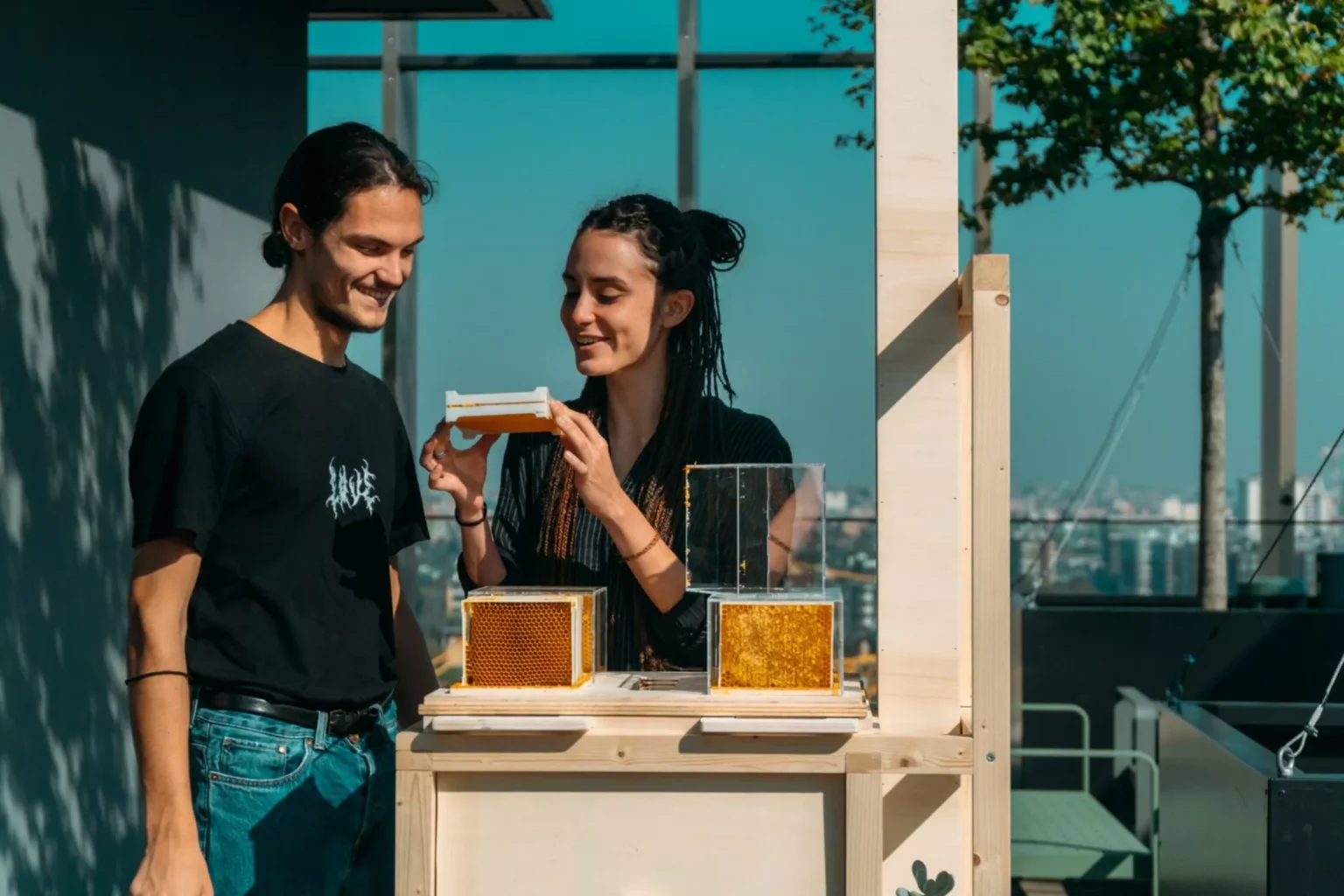
B‑BOX is the urban hive by definition: safe, manageable from the outside, aesthetically integrated. The Plus version includes the swarm and training.
Our partner beekeepers supply healthy swarms suited to your area. Free introduction with B‑BOX Plus.
A quick weekly visual check (2 minutes), seasonal maintenance twice a year, honey harvest at the end of summer. All guided by the manual.
Myths to debunk
→ False. B‑BOX is designed for balconies, rooftops, gardens. Just 2 m² of good sun exposure is enough.
→ Honeybees are docile. B‑BOX's glass wall separates you from the colony: you manage everything from the outside.
→ No. B‑BOX is designed for beginners. Illustrated manual + video tutorials + support from partner beekeepers.
→ A complete B‑BOX starts at €597. A swarm costs €120–180 depending on your area. No subscriptions, no hidden costs.
Get to know the swarm
Three roles coexist within the swarm, each with a precise task.
The male bees: they have no stinger and their only purpose in life — which only a small share manage to fulfil — is to mate with a queen. Larger than workers, with big eyes to spot the queen in flight. Mating happens in flight, and the drones that succeed die right after.
Most of the bees in the hive. Sterile females, they take on different tasks as they age: "housekeepers" of the swarm in their first days, then nurses for the larvae, guards, undertakers, assistants to the queen, wax producers and nectar carriers. Towards the end of their life they become foragers, going out to search for nectar and pollen.
She is the mother of almost every bee in the hive and the largest bee in the colony. As a larva she is fed exclusively royal jelly; she then takes her nuptial flight, during which she is fertilised by the drones. She spends her life laying eggs in the brood cells — around 1,500 a day! — always followed by her retinue of workers.
Learn more